Most camps in Kenya do not run one price all year. They run three, sometimes four. The gap between the cheapest and the most expensive tier can be wide. Travelers who book in the wrong window pay a premium for crowds they never wanted. Shoulder season sits between the two extremes. It is the part of the calendar most worth understanding before you book.
What “Shoulder Season” Actually Means in Kenya
Kenya’s safari year splits into three broad bands, not two. Peak season runs July through October, when the wildebeest migration crosses the Mara River and camps fill early. A second short peak covers the Christmas and New Year window, roughly December 20 to January 2. Green season, sometimes called low season, covers the long rains from March through May and the short rains in November. Some roads soften in these months, and a handful of camps close entirely.
Shoulder season sits between those two: January and February, plus June. Rain is minimal, wildlife viewing stays strong, and camps are not yet at the July surge. Rates drop from peak-season levels, but the parks are not empty and the roads are not muddy. That combination is why repeat safari travelers often target this window on purpose. Touring Insights compared camp rate cards across all three bands to see how the numbers actually move.
Kenya’s Safari Calendar at a Glance
| Season | Months | Rainfall | Typical camp rate band (indicative, per person/night) | Crowd level |
|---|---|---|---|---|
| Peak | Jul-Oct, plus Dec 20-Jan 2 | Dry, except short bursts in Nov-linked years | $600-900+ | High, book 6-12 months out |
| Shoulder | Jan-Feb, Jun | Dry to light | $400-650 | Moderate |
| Green/low | Mar-May, Nov | Long rains Mar-May, short rains Nov | $280-480 | Low, some camps close |
These bands are indicative and vary by camp tier, region, and operator. Always confirm current rates directly with the camp or a booking partner before you commit.
How Much Camps Actually Cut Rates
The discount is not marketing language. It shows up as a real drop in the nightly rate at named camps across the main circuits. A mid-tier Mara camp charging premium-season rates in August will often list a lower per-night rate for the same tented room in January or June. Luxury camps in the Mara Triangle and Naboisho Conservancy, including properties like Angama Mara and Kicheche Mara Camp, typically post a lower shoulder-season rate than their July-October card rate. Amboseli‘s Tortilis Camp and Samburu’s Elephant Bedroom Camp follow the same pattern, with January-February and June rates set below the July peak.
The size of the cut varies by camp and year, so treat any specific percentage as a planning range rather than a guarantee. Many travelers report savings in the 25-40% range on the same room category when moving from peak to shoulder dates. Ask the camp directly for its rate sheet by month. Most East African lodges publish a seasonal rate card that shows the exact numbers rather than a single average figure.
The gap tends to be widest at the top end of the market. A camp charging its highest nightly rate in August often has the most room to discount in January, simply because the fixed costs, staff, food, and vehicle maintenance, stay similar across the year while demand does not. Smaller owner-run camps sometimes hold a flatter rate structure, with a narrower gap between peak and shoulder. Ask directly rather than assuming every property discounts by the same margin.
Wildlife Odds: What You Still See in January-February and June
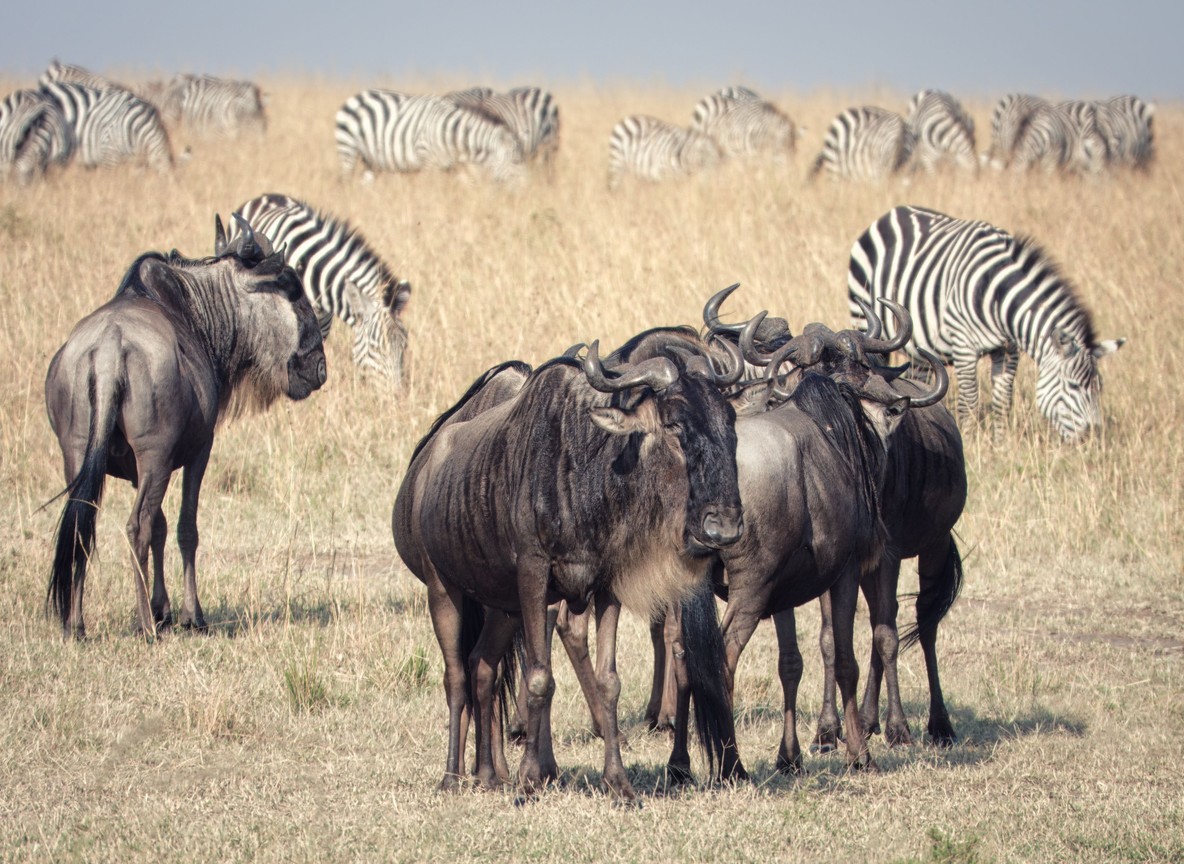
Rate cuts mean little if the wildlife viewing drops with them. It mostly does not, for a specific reason: the Mara’s resident wildlife, lion prides, elephant herds, giraffe, and resident plains game, do not migrate. They stay put year-round. What changes with the season is the concentration of wildebeest and zebra tied to the Serengeti-Mara migration cycle.
January and February fall during calving season on the Serengeti’s southern plains, in Tanzania, not Kenya, so the bulk of the migration herd is south of the border during these months. Kenya’s Mara still holds strong resident game, plus predators following that resident game. June is different again: it is when the migration herds begin moving north out of the Serengeti toward the Mara, so late June can deliver early river-crossing activity in the Mara Triangle and Sand River areas, sometimes weeks ahead of the July peak.
Amboseli, Tsavo, and Samburu do not depend on the migration at all. Elephant sightings in Amboseli, against the Kilimanjaro backdrop, run strong through shoulder season, since the park’s resident herds concentrate near the swamps regardless of month.
Where to Go for Shoulder-Season Value
| Park or reserve | Size (km2) | Entry fee (indicative, per person/day) | Drive time from Nairobi | Flight from Wilson Airport |
|---|---|---|---|---|
| Maasai Mara National Reserve | 1,510 | $80-100 | Approx. 270 km, 5-6 hr road | 40-45 min to Musiara or Keekorok airstrip |
| Amboseli National Park | 392 | $60-90 | Approx. 240 km, 4-5 hr road | 30-45 min to Amboseli airstrip |
| Tsavo West National Park | 9,065 | $52-60 | Approx. 240 km, 4-5 hr road | 35-45 min to Kilaguni airstrip |
| Samburu National Reserve | 165 | $70-90 | Approx. 325 km, 5-6 hr road | 55-70 min to Samburu airstrip |
| Lake Nakuru National Park | 188 | $60-80 | Approx. 160 km, 2.5-3 hr road | Not typically flown |
Fees, gate rules, and rate cards change with park policy and camp ownership. Confirm current numbers with the reserve, conservancy, or camp before you travel.
Naboisho, Ol Kinyei, and the Mara North conservancies, all bordering the Mara Reserve, often carry their own shoulder-season conservancy fees, generally in the $70-100 per person/day range, separate from the national reserve fee above. These conservancies cap vehicle density, so wildlife density per vehicle tends to feel higher than inside the reserve itself, peak season or not.
Weather and Road Conditions to Plan Around
June sits right at the tail end of the long rains, so some Mara access roads can still carry mud in the first week or two. By mid-June, most routes firm up. January and February are dry and warm across the southern circuits, with daytime temperatures in the Mara typically in the high 20s Celsius, dropping into the low teens overnight. Pack a warm layer for pre-dawn game drives even in the dry months; open vehicles at 6:00am get cold before the sun clears the horizon.
Tsavo and Amboseli stay dusty and dry through both shoulder windows. Samburu, further north, runs slightly hotter, with daytime highs often above 30 Celsius in both January-February and June.
Pack for dust regardless of month. Kenya’s dry-season tracks throw fine red dust on open vehicles, and shoulder season is dry across every major circuit except the first days of June. A buff or light scarf for the face, plus a dry bag for camera gear, earns its space in the duffel.
Explorer Notes
Ask for the rate sheet by exact date range, not a general “low season” quote. Some camps set January 3-31 as shoulder and the first week of February as a separate, slightly higher band tied to Valentine’s demand. A three-day shift in your travel dates can change the nightly rate meaningfully.
Book conservancy stays over reserve-only stays if wildlife density matters more to you than rate. Conservancies limit vehicle numbers by contract, so a shoulder-season conservancy stay at a lower rate than peak-season reserve accommodation often delivers a better sightings ratio, not just a lower bill.
Confirm which shoulder-season camps close for maintenance in late April through early June. Several properties use the tail of the green season for refurbishment before reopening for the June shoulder window, and refurbishment schedules shift year to year.
Ask about single-supplement waivers. Shoulder season is when solo travelers are most likely to get a reduced or waived single-room surcharge, since occupancy runs lower than peak months.
Frequently Asked Questions
When exactly is Kenya’s shoulder season? January and February, plus June. These months sit between the July-October and December holiday peaks and the March-May and November green seasons.
Do camps really cut rates in shoulder season, or is it a marketing term? The cuts are real and appear on published rate cards. Many camps show a nightly rate 25-40% below their July-October card rate for the same room category in January-February or June.
Will I miss the wildebeest migration if I book shoulder season? The bulk of the migration herd is typically in Tanzania’s southern Serengeti during January-February. Late June can catch the herds arriving in the Mara, sometimes ahead of the July peak, though timing varies by year.
Is shoulder season a good time for a first safari? Yes. Resident wildlife, lion, elephant, giraffe, and general plains game, stays visible year-round in the Mara, Amboseli, and Samburu, regardless of migration timing.
Are roads passable in June and January? January and most of February are dry. Early June can still carry residual mud from the long rains on some Mara routes, easing by mid-month.
Ready to compare shoulder-season rates against real camp availability? Check our Tour Packages page for current options, or ask a partner operator directly for their January-February and June rate card before you lock in dates.
What to Read Next
- Curious how shoulder season stacks up against the true off-peak months? Read our Maasai Mara peak vs shoulder season guide.
- Weighing where your rate cut goes furthest? See our budget vs luxury safari 2026 divide.
- Planning conservancy stays over reserve-only game drives? Our 230 conservancies guide breaks down the difference.
Further reading
More safari planning resources
- Best time to visit Kenya month-by-month map from Valley Safaris
- Best time to visit Kenya on Touring Insights
- Great Migration safari collection on FindMySafari
- Wildebeest migration route map from Valley Safaris
Related guides: Amboseli Calves and Baby Animals: When to Visit for Young Wildlife.